

 Sign-In
 Cart
Cart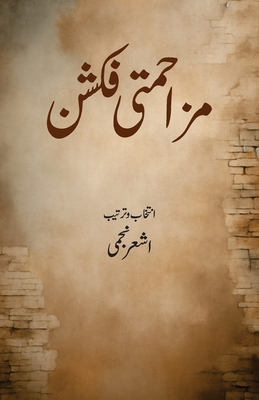
Mazahmati Fiction: Resistance Fiction
Paperback
General FictionLiterary Fiction
Publisher Price: $34.99
ISBN13: 9788198129475
Publisher: Bright Books
Published: Oct 22 2024
Pages: 186
Weight: 0.53
Height: 0.43 Width: 5.50 Depth: 8.50
Language: Urdu
It is indubitable that literature encompasses a certain degree of deviation. The use of literary language represents a manifestation of this deviation. The language employed in literature is distinct from that utilized in other scientific disciplines, as well as from everyday language. The creative use of language elements that are embedded within its structure is a defining feature of literary language. In addition, the act of expression printing is worthy of note. It can be surmised that literature, like language, is resistant to change. This implies that every writer, by virtue of being a writer, has a certain degree of resistance. The world he creates through his deviation from it is not without consequence. The concept of literary language, particularly as a means of articulating the tenets of literary tradition, is similarly imbued with a certain degree of prestige. A writer expresses a particular perspective by selecting a specific element of literary language. In other words, he asserts that he will accept a specific paraphrase that is already established within the tradition, adhere to a particular literary canon, or even dare to invent an entirely new paraphrase. He will either align with some aspect of the tradition itself or become an imitator. The act of adaptation serves to reinforce the tradition, demonstrating its continued relevance and validity even in the face of changing times. Conversely, an unconventional style creates a dissonance within the tradition, reflecting a concern and anxiety about the past and tradition. Even when it is entirely fantastical in nature, it nevertheless retains some degree of connection to the real world. The decision to employ fantasy as a literary device represents a critique of realism as an inadequate mode of representing the world. The position of literature with regard to linguistic, stylistic, or other aspects can be characterized as either one of adaptation, resistance, or as belonging to a grey area beyond these two positions. Furthermore, it can be a means of remaining in the world and observing it. This stance is situated within the same socio-political context, where there is a persistent pursuit of establishing and consolidating political power and authority. In light of these considerations, we propose that this literature may be designated as a form of resistance, which interrogates the various power structures, symbols, phenomena, and strategies that shape our reality. It challenges these structures, rejects them, and illuminates the shadows cast by them, from which the light of truth emerges.
Also in
Literary Fiction
Elizabeth Spencer: Novels & Stories (Loa #344): The Voice at the Back Door / The Light in the Piazza / Knights and Dragons / Stories
Spencer, Elizabeth
Hardcover
James Fenimore Cooper: The Leatherstocking Tales Vol. 1 (Loa #26): The Pioneers / The Last of the Mohicans / The Prairie
Cooper, James Fenimore
Hardcover
The Underworld U.S.A. Trilogy, Volume I: American Tabloid, the Cold Six Thousand; Introduction by Thomas Mallon
Ellroy, James
Hardcover
The Strange Case of Dr. Jekyll and Mr. Hyde and Other Stories (Barnes & Noble Classics Series)
Stevenson, Robert Louis
Paperback
Johnny Panic and the Bible of Dreams: Short Stories, Prose, and Diary Excerpts
Plath, Sylvia
Paperback
The Patrick Melrose Novels: Never Mind, Bad News, Some Hope, and Mother's Milk
St Aubyn, Edward
Paperback