

 Sign-In
 Cart
Cart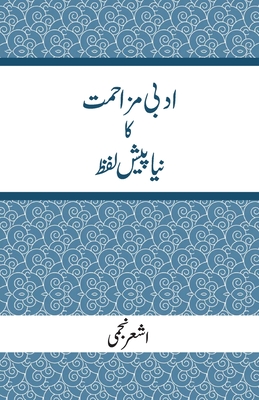
Adbi Mazahmat Ka Naya Pesh Lafz: A New Preface to Literary Resistance
Paperback
Publisher Price: $29.99
ISBN13: 9788198129437
Publisher: Bright Books
Published: Oct 22 2024
Pages: 154
Weight: 0.45
Height: 0.36 Width: 5.50 Depth: 8.50
Language: Urdu
It is a common assumption that the act of writing itself constitutes a form of resistance. If this proposition is accepted as accurate, it follows that the history of literature is, in fact, the history of resistance. Regardless of the era in which they write or their affiliation with a particular movement, writers have consistently employed their craft to challenge the structures of power, oppression, and exploitation. However, if we consider the history of literature, we may find evidence to support this opinion, or even that resistance is an essential principle inherent in the process of writing itself. Both categories of writers are evident in the historical record. To illustrate, during the twentieth century, fascism was regarded as the most significant threat to both civilization and humanity. Ether Uppond was an outspoken supporter of Mussolini. Additionally, T. S. Eliot was accused of supporting fascism. In addition, WB Yeats was known to have supported the fascist organization, the Irish Blue Shirts. Heidegger was an outspoken proponent of Hitler and his ideology, openly espousing his support through his writings and professional activities. Austrian Nobel laureate Peter Handke has been the subject of criticism for expressing support for the actions of the Serbian president, which have been deemed brutal. George Orwell, in contrast, produced fiction and other writings that were critical of totalitarianism. Camus demonstrated a consistent resistance to all forms of aggression throughout the Second World War. Bertrand Russell was instrumental in the formation of the Writers' Tribunal, which was established to oppose the American invasion of Vietnam. Sartre was an outspoken opponent of the French government's actions during the Algerian War. Moreover, he declined all incentives, including the Nobel Prize, extended to writers.
Such writers have been present throughout our own history. In the War of Independence of 1857, Imam Bakhsh Sahbai perished on one side, while Fazal Haq Khairabadi was sentenced to be exiled to the desolate region of Black Water, where he was subsequently executed. Conversely, writers such as Ghalib and Sir Syed endorsed the British colonial presence. The role of writers in Pakistan can be elucidated by examining the Rawalpindi Conspiracy Case and the Writers Guild. While the Rawalpindi Conspiracy case was not devoid of military exploitative intentions, it marked the beginning of efforts to suppress the independent thought of writers (especially progressives) by state power. This was exemplified by the military dictator Ayub's Ema۔
Also in
General Fiction
Elizabeth Spencer: Novels & Stories (Loa #344): The Voice at the Back Door / The Light in the Piazza / Knights and Dragons / Stories
Spencer, Elizabeth
Hardcover
Anniversaries, Volume 2: From a Year in the Life of Gesine Cresspahl, April 1968-August 1968
Johnson, Uwe
Paperback
Philip Roth: Novels 1973-1977 (Loa #165): The Great American Novel / My Life as a Man / The Professor of Desire
Roth, Philip
Hardcover
Selected Writings: Robert Musil: Young Torless, Three Women, the Perfecting of a Love, and Other Writings
Musil, Robert
Agee, Joel
Paperback
Before Gatsby: The First Twenty-Six Stories
Bruccoli, Matthew J.
Baughman, Judith
Fitzgerald, F. Scott
Paperback