

 Sign-In
 Cart
Cart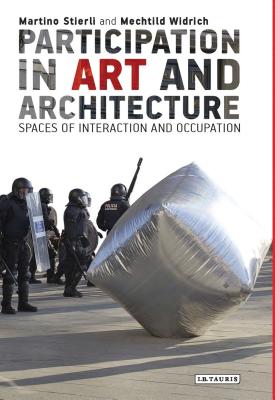
Participation in Art and Architecture: Spaces of Interaction and Occupation
Hardcover
Series: International Library of Visual Culture
Art Criticism & TheoryArt History
Please select the version of book you would like to purchase.
ISBN10: 1784530301
ISBN13: 9781784530303
Publisher: Bloomsbury Publishing PLC
Published: Oct 16 2015
Pages: 344
Weight: 1.25
Height: 1.40 Width: 5.50 Depth: 8.60
Language: English
ISBN13: 9781784530303
Publisher: Bloomsbury Publishing PLC
Published: Oct 16 2015
Pages: 344
Weight: 1.25
Height: 1.40 Width: 5.50 Depth: 8.60
Language: English
Does 'participatory' art and architecture shape social reality, or is it shaped by it?
Shifting the ground of this debate, which tends to assume one or other direction of influence, this innovative book explores the inherently dialectic relationship between society and the built environment. At the same time, it strives for a historically conscious discussion of a very contemporary issue. Chapters rethink the top-down model of participation and audience activation of high modernism, from Alexander Dorner's immersive museum to Mies van der Rohe's 'room(s) for play'; investigate participation in spaces under political pressure, from exhibitions in bombed-out buildings in besieged Sarajevo (1992-5) to the art and organizing of revolution in Egypt (2012-13); draw historical parallels between modes of participation and the exercise of power that are seldom compared with one another, from sites of occupation in 1968 Mexico and 2011 Spain; finally creating links between cartography and feminism and between tourism and internet surveillance. With these juxtapositions of the aesthetic and the everyday, and the built and the mediated, new questions arise: is space formed once and for all, or is it the changeable product of changeable patterns of use? Does the aesthetic always correspond to the political, or might an aesthetically authoritarian space be conducive to social justice? In exploring these questions, this book looks at how participants themselves exert power, rather than being victimised or liberated from it.1 different editions
Also available
Also in
Art History
The Secrets of Art: Uncovering the Mysteries and Messages of Great Works of Art
Mancoff, Debra N.
Hardcover
$24.99
Progressive Design in the Midwest: The Purcell-Cutts House and the Prairie School Collection at the Minneapolis Institute of Arts
Olivarez, Jennifer Komar
Paperback
From $12.99
Sabine's Notebook: In Which the Extraordinary Correspondence of Griffin & Sabine Continues
Bantock, Nick
Hardcover
$10.99
Paint by Sticker (Official): Works of Art: Re-Create 12 Iconic Masterpieces One Sticker at a Time!
Workman Publishing
Paperback
$16.14
Paint by Sticker (Official): Masterpieces: Re-Create 12 Iconic Artworks One Sticker at a Time!
Workman Publishing
Paperback
$16.14
Oliver Byrne's Elements of Euclid: The First Six Books with Coloured Diagrams and Symbols (Art Meets Science Edition)
Art Meets Science
Hardcover
$59.99
Stupid Faces in Stunning Paintings: A Serious Exploration of Art History's Silliest Expressions
Mierlo, Matthijs Van
Hardcover
$23.74
The Art Spy: The Extraordinary Untold Tale of WWII Resistance Hero Rose Valland
Young, Michelle
Hardcover
From $19.99
Femina: A New History of the Middle Ages, Through the Women Written Out of It
Ramirez, Janina
Paperback
$19.79
Paint by Sticker (Official): Portraits: Re-Create 12 Historic Paintings One Sticker at a Time!
Workman Publishing
Paperback
$17.09
Flashes of Brilliance: The Genius of Early Photography and How It Transformed Art, Science, and History
Burgess, Anika
Hardcover
$33.25
The Secrets of Painting: The Hidden Art of the Masterpiece from Prehistory to Today
Goudie, Lachlan
Hardcover
$45.00
The Short Story of Queer Art: A Pocket Guide to Key Movements, Works, Themes & Breakthroughs
Hoskin, Dawn
Paperback
$21.59
Adventures in the Louvre: How to Fall in Love with the World's Greatest Museum
Sciolino, Elaine
Paperback
$19.79
Van Gogh Has a Broken Heart: What Art Teaches Us about the Wonder and Struggle of Being Alive
Ramsey, Russ
Hardcover
$28.49
The Annotated Mona Lisa, Third Edition: A Crash Course in Art History from Prehistoric to the Present
Strickland, Carol
Paperback
$28.49
Rethinking American Art: Collectors, Critics, and the Changing Canon
Stebbins Jr, Theodore E., Jr.
Hardcover
$49.50
AP Art History Premium, Sixth Edition: Prep Book with 5 Practice Tests + Comprehensive Review + Online Practice
Nici, John B., M. a.
Paperback
$42.74
Weaving at Black Mountain College: Anni Albers, Trude Guermonprez, and Their Students
Beggs, Michael
Thomson, Julie J.
Hardcover
$38.00
Adventures in the Louvre: How to Fall in Love with the World's Greatest Museum
Sciolino, Elaine
Hardcover
$28.49